APO News & Insights

Auto Body & Repair Blog

Expert tips, collision repair guides, custom paint advice, and industry news from Auto Parts Outlet.

0%

Choosing the right KeyKling Plastic Sheeting in 2026 requires more than comparing prices and thickness labels. The correct material should match the job, environment, and expected service life. A temporary dust barrier needs different performance from a greenhouse cover, construction membrane, or outdoor storage sheet. Start with thickness, dimensions, transparency, flexibility, tear resistance, and moisture protection. Small details matter.

Consider the working conditions carefully. Will the sheeting face strong sunlight, sharp edges, freezing temperatures, or repeated handling? For outdoor use, ultraviolet resistance can help reduce brittleness and early cracking. For construction projects, reinforced layers and reliable seam performance may matter more than appearance. I have found that measuring the coverage area twice prevents expensive gaps and unnecessary waste. Still, product descriptions can be incomplete, and no single specification guarantees perfect performance. That deserves attention.

A dependable choice also requires evidence from the supplier. Review technical data, batch consistency, warranty terms, packaging quality, and customer support. Look for clear information about material composition and intended applications. Independent testing or documented quality controls can strengthen confidence. However, marketing language should not replace practical verification. Request samples when the project has strict requirements. Test a small section before full installation. This simple step may reveal stiffness, odor, handling problems, or weak edges.

This guide explains how to compare KeyKling Plastic Sheeting with a professional, practical approach. It focuses on fit, durability, safety, and long-term value. The best option is not always the thickest or cheapest. It is the sheet that performs reliably under real conditions.
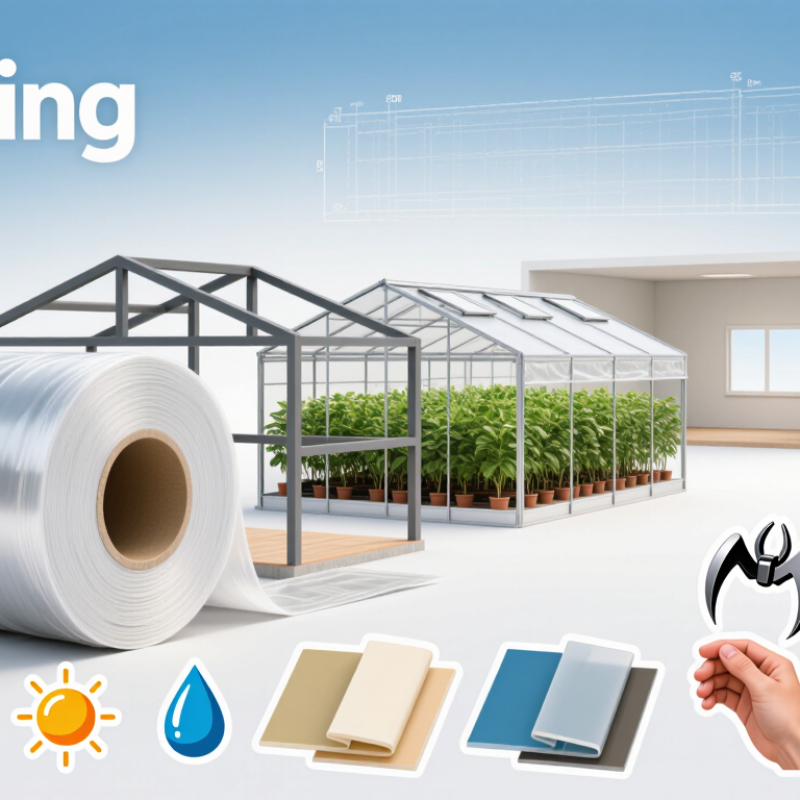
How to Choose KeyKling Plastic Sheeting in 2026?

Understanding KeyKling Plastic Sheeting Types and Materials

Choosing plastic sheeting in 2026 starts with understanding its material, not its color or advertised thickness. Polyethylene remains the common choice for temporary covers, dust barriers, and moisture control. Low-density polyethylene is flexible and easy to fold. It works well around corners and uneven surfaces. High-density polyethylene offers greater tensile strength and resists punctures more effectively. It feels stiffer in cold conditions, though.

Reinforced polyethylene includes a woven mesh between laminated layers. This structure helps protect larger covers from tearing during windy weather. Clear sheeting allows sunlight through but may become brittle under prolonged ultraviolet exposure. For outdoor use, check the stated UV-resistance period. That number matters more than a bright appearance. PVC sheeting is heavier and more flexible in some applications, but it can be harder to handle and may require stronger supports.

Measure the area carefully, then add overlap for seams and edges. A thicker sheet is not always better. It can create unnecessary weight, awkward folds, and higher installation stress. In practical site checks, I look for clean edges, consistent thickness, and reinforced eyelets. Weak grommets often fail before the plastic does. Temperature also deserves attention. Some films become stiff below freezing, while heat can soften them. I have seen sheets selected correctly on paper but poorly matched to real weather. Material data should be checked against the supplier’s technical documentation and the actual working conditions.

Assessing Thickness, Strength, and Protection Requirements

Choosing plastic sheeting starts with the job, not the product label. Measure the covered area, then add enough material for overlaps and fastening points. A thin sheet may suit indoor dust control, temporary floor covering, or light paint protection. For outdoor use, thicker sheeting usually resists tearing, wind, and repeated handling better.

Thickness alone does not prove strength. Check the material’s tear resistance, puncture resistance, and flexibility at the expected temperature. A 6-mil sheet can perform well in a sheltered workspace, while a 10-mil or thicker sheet may be safer around rough timber, stone, or sharp edges.

Test a small section before full installation. I have seen heavy plastic fail when stretched tightly over an uneven frame.

Protection requirements also depend on exposure time. Short projects may need basic moisture resistance, but longer outdoor coverage requires ultraviolet resistance and secure edge fastening. Use wide overlaps, reinforced tape, and rounded support points where possible. Keep water from collecting in low areas. It adds unexpected weight. For dust, select sheeting that closes gaps easily and remains flexible around doors, pipes, and corners.

Specifications can be incomplete. Recheck the supplier’s test data and intended-use guidance before purchasing. A stronger sheet may still be unsuitable if it becomes brittle in cold conditions. The best choice balances thickness, handling, exposure, and replacement cost. There is no perfect thickness for every site.

Matching Sheet Features to Specific Applications

How to Choose Plastic Sheeting in 2026?

Matching sheet features to the application prevents wasted material and avoidable failures. For indoor dust control, choose a lightweight sheet that folds easily and resists tearing around corners. A thicker grade suits construction barriers, temporary covers, and repeated handling. Check the technical data sheet, not only the advertised thickness. Two sheets may look similar but perform differently under tension.

Outdoor use requires more careful matching. UV resistance matters for greenhouse covers, equipment protection, and seasonal storage. For damp ground, select a sheet with low water permeability and enough puncture resistance for stones or rough surfaces. Clear film admits light, while opaque film provides stronger privacy and shade. In cold areas, flexibility at low temperatures can matter more than maximum tensile strength. Small details matter.

Measure the coverage area before buying. Add extra material for overlaps, folds, and secure edges. Use compatible tape, clips, or weighted supports rather than relying on sharp staples alone. I have seen neatly installed sheets fail because wind pulled against unreinforced corners. That mistake is easy to repeat. Recheck the application after weather changes, especially when the sheet is exposed for weeks. Some product descriptions remain too general, so compare thickness, tear strength, UV rating, temperature range, and intended service life before making a decision.

Comparing Size, Durability, and Environmental Performance

Choosing Plastic Sheeting in 2026: Size, Durability, and Environmental Performance

The correct sheet size begins with the job, not the price tag. Measure the covered area, then add enough material for overlaps, folds, and anchoring. A 20-foot sheet may seem efficient, but a narrower roll can reduce waste on small repairs. I usually allow an extra 10 percent for uneven ground and movement. That estimate is not perfect.

Durability depends on thickness, weave, coating, and exposure. A light sheet may work indoors, while outdoor storage needs stronger tear resistance and stable seams. Check the specification for tensile strength, puncture resistance, temperature range, and waterproofing. In practical use, sharp gravel can damage a thick sheet faster than careful handling damages a thinner one. I once chose by thickness alone. That judgment was too simple. Reinforced edges and reliable eyelets often matter more during windy installation.

Environmental performance deserves equal attention. Look for recycled content, transparent material disclosures, and packaging that avoids unnecessary layers. A longer-lasting sheet may create less replacement waste, but only when its service life matches the application. Ask whether local facilities accept the material after use. “Recyclable” does not guarantee convenient recycling. Keep the sheet clean and separate from soil, adhesives, and mixed waste. Some manufacturers publish life-cycle data or third-party certifications; these details deserve closer inspection than broad green claims. A practical choice balances the required size, expected stress, and realistic end-of-life options.

Checking Quality, Compatibility, and Purchase Specifications

Choosing plastic sheeting in 2026 requires more than comparing thickness and price. Start with the working environment. Check temperature, sunlight exposure, moisture, solvents, and contact with oils. Polyethylene may suit moisture barriers, but some chemicals can cause swelling or brittleness. Review the technical data sheet, not only the sales description. ISO 4593 supports thickness measurement, while ASTM D882 evaluates tensile properties. For impact resistance, ASTM D1709 is useful. Measure twice. That small habit prevents expensive fitting errors.

Purchase specifications should state thickness in microns, roll width, roll length, core diameter, color, tolerance, and packaging method. Request a sample from the actual production lot. A glossy surface can look reliable while tearing near a folded edge. I have also seen thicker film fail because its formulation matched the wrong application. Not always. PlasticsEurope’s Plastics—The Fast Facts 2024 reports 413.8 million tonnes of plastics production worldwide in 2023, so material choice increasingly needs traceability and waste planning. Ask for batch identification, a certificate of analysis, recycled-content details, and storage limits. The UNEP Turning off the Tap report indicates that better material design could substantially reduce plastic pollution by 2040. That target is ambitious, and suppliers may not provide every detail. Record what remains uncertain before approving a large order.

How to Choose KeyKling Plastic Sheeting in 2026? — Checking Quality, Compatibility, and Purchase Specifications
Evaluation Dimension Recommended Specification or Benchmark Why It Matters How to Verify Before Purchase Purchase Specification to Record
Material Type Choose low-density polyethylene (LDPE) for flexible covering, high-density polyethylene (HDPE) for higher stiffness, or a multilayer polyethylene structure when a balance of flexibility and strength is required. Polymer type affects flexibility, puncture resistance, stiffness, chemical resistance, and service life. Request the material declaration and technical data sheet. Polymer type, multilayer construction, recycled-content percentage, and additive package.
Nominal Thickness Light-duty cover: approximately 0.05–0.10 mm; general-purpose protection: 0.10–0.20 mm; heavy-duty barrier or ground use: 0.20–0.50 mm or higher. Thickness influences tear resistance, puncture resistance, handling weight, and expected service life. Compare multiple thickness readings across the roll, not only the labeled nominal value. Thickness in millimeters and mils, permitted tolerance, and measurement method.
Basis Weight Record mass per unit area in g/m² when comparing products with different constructions or coatings. Basis weight provides a useful cross-check because two sheets with the same stated thickness can have different structures and densities. Check the declared value and weigh a measured sample when incoming inspection is required. Target basis weight, tolerance, roll weight, and sample dimensions.
Tensile Strength Specify machine-direction and transverse-direction values separately; use the supplier’s stated test standard and specimen direction. Plastic film can be anisotropic, meaning strength may differ significantly along and across the extrusion direction. Review test results made under ASTM D882 or an equivalent internationally recognized method. Minimum tensile strength in MPa or N/mm² in both directions, test speed, and conditioning conditions.
Elongation at Break Specify a minimum value in both directions rather than relying only on thickness. Higher elongation can help the sheet conform around corners and resist splitting during installation, although excessive stretch may reduce dimensional stability. Request machine-direction and transverse-direction test values. Minimum elongation percentage, test direction, and test method.
Tear Resistance Use a measured tear-resistance requirement for applications involving pulling, folding, fastening, or wind exposure. Tear resistance indicates how well a small cut or puncture is prevented from propagating. Check ASTM D1004, ASTM D1922, or another agreed equivalent, depending on the sheet type. Minimum tear force in N, test direction, specimen type, and acceptance tolerance.
Puncture Resistance Set a puncture requirement for ground covers, construction barriers, packaging, and applications exposed to sharp edges. A sheet may have adequate tensile strength but still puncture easily under concentrated loads. Request puncture test data using an agreed method such as ASTM D1709 or an application-specific test. Minimum puncture force or impact energy, probe type, and test temperature.
UV and Weather Exposure For outdoor use, select UV-stabilized material with a declared target exposure period; un-stabilized film is generally intended for short-term or indoor use. Ultraviolet radiation, heat, moisture, and temperature cycling can cause embrittlement, discoloration, and loss of strength. Request accelerated-weathering data and clarification of how the stated outdoor life was determined. Intended outdoor duration, climate assumptions, UV stabilizer declaration, and post-exposure strength retention.
Temperature Range Specify the expected minimum and maximum operating temperatures and avoid using a sheet outside the supplier’s validated range. Low temperatures can make polyethylene brittle, while high temperatures can increase softening, creep, and dimensional change. Review the technical data sheet and conduct a sample trial at the actual service temperature when critical. Continuous-use range, short-term peak temperature, storage range, and temperature-test conditions.
Chemical Compatibility Polyethylene is generally suitable for many water-based solutions, dilute acids, and dilute alkalis, but compatibility depends on concentration, temperature, exposure time, and stress. Certain hydrocarbons, aromatic solvents, strong oxidizers, and elevated-temperature chemicals may cause swelling, softening, cracking, or permeation. Check a chemical-resistance chart and perform a controlled immersion or contact test for critical applications. Chemical name, concentration, temperature, contact duration, and required permeability or strength limit.
Food or Potable-Water Contact Use only material supported by the regulations and declarations applicable to the destination market and intended contact condition. General-purpose plastic sheeting is not automatically suitable for food or drinking-water contact. Request a current compliance declaration, migration information, and traceability documentation. Applicable market regulation, contact temperature, contact duration, and lot traceability.
Surface and Slip Properties Choose smooth, embossed, or textured surfaces according to the required friction, cleanability, release, and handling performance. Surface texture affects sliding, condensation behavior, sealing, printing, and ease of cleaning. Inspect samples under the intended lighting and test the sheet with the actual mating surface. Surface finish, coefficient-of-friction requirement if applicable, gloss, color, and printability.
Transparency and Color Specify clear, translucent, opaque, or colored film and define the required visual uniformity. Optical properties affect light transmission, inspection visibility, heat absorption, and privacy. Compare a production sample with the approved reference under consistent lighting. Color reference, opacity or light-transmission target, haze requirement, and allowable variation.
Sealing and Joining For heat sealing, confirm the sealing temperature window, dwell time, pressure, and seal strength using the selected equipment. Film compatibility with sealing equipment determines leak resistance and production efficiency. Make trial seals and inspect for channels, burn-through, incomplete fusion, and peel failure. Sealing method, temperature range, dwell time, pressure, seal width, and minimum seal strength.
Roll Width and Length Order the closest practical width and length to reduce trimming, overlaps, waste, and unnecessary joints. Actual dimensions can vary because of manufacturing tolerance, shrinkage, and winding conditions. Measure the delivered roll and confirm usable width rather than relying only on nominal dimensions. Nominal width, usable width, roll length, dimensional tolerances, core diameter, and winding direction.
Dimensional Stability Specify shrinkage or dimensional-change limits when the sheet will be exposed to heat, tension, or outdoor temperature cycling. Uncontrolled shrinkage can create gaps, wrinkles, stress concentration, and loss of coverage. Review heat-shrinkage or dimensional-stability test results at the expected service temperature. Maximum change in machine and transverse directions, test temperature, and exposure time.
Visual Quality Require a consistent surface free from holes, gels, streaks, contamination, severe wrinkles, and unbonded layers. Visible defects can reduce barrier performance, appearance, sealing quality, and usable yield. Define an inspection procedure, defect-size limit, inspection lighting, and sampling plan. Acceptable defect type and size, defect frequency, roll-edge condition, and inspection level.
Packaging and Storage Store rolls indoors, dry, protected from direct sunlight, excessive heat, and contact with sharp objects; follow the supplier’s stacking limits. Improper storage can cause deformation, blocking, contamination, and premature UV or heat aging. Inspect packaging for moisture, crushing, punctures, and missing lot information at delivery. Packaging type, pallet configuration, maximum stacking height, storage temperature, and shelf-life guidance.
Traceability and Documentation Require a batch or lot number, production date, certificate of analysis when needed, and a current technical data sheet. Traceability supports quality investigation, repeat ordering, regulatory review, and supplier accountability. Match the label, packing list, certificate, and ordered specification before acceptance. Lot number, production date, certificate requirements, revision-controlled documents, and retention period.
Total Purchase Cost Compare cost per usable square meter, including transport, core and packaging charges, minimum order quantity, waste, and testing. The lowest price per roll may not provide the lowest installed or usable cost. Request a full quotation with the same thickness, dimensions, tolerance, documentation, and delivery terms. Price per m², minimum order quantity, lead time, freight terms, payment terms, replacement policy, and warranty scope.

FAQS

How should I choose plastic sheeting for indoor dust control?

Choose a lightweight sheet that folds easily and resists tearing around corners. It should be easy to handle. Add extra material for overlaps and secured edges.

When is thicker plastic sheeting a better choice?

Use thicker sheeting for construction barriers, temporary covers, and repeated handling. Check tear strength, not thickness alone. Two similar-looking sheets may perform differently under tension.

What features matter for outdoor plastic sheeting?

Look for UV resistance, suitable temperature flexibility, and puncture resistance. These features help with sunlight, cold weather, stones, and rough surfaces. Performance still depends on installation.

How does transparency affect sheet selection?

Clear film allows light through for certain covers and growing areas. Opaque film offers stronger privacy and shade. The best choice depends on the required visibility.

How can I prevent wind from damaging installed sheeting?

Reinforce corners and secure edges with compatible tape, clips, or weighted supports. Do not rely on sharp staples alone. Wind finds weak corners.

What information should appear in a purchase specification?

State thickness in microns, roll width, roll length, core diameter, color, tolerance, and packaging method. Include the intended service life. Missing details create avoidable uncertainty.

Why should I request a production sample before placing a large order?

A sample can reveal tearing near folded edges, weak flexibility, or surface defects. Request a sample from the actual production lot when possible. Gloss does not prove strength.

Which environmental conditions should I check before selecting plastic sheeting?

Review temperature, sunlight, moisture, solvents, and oil contact. Some materials may swell or become brittle around unsuitable chemicals. I would record uncertain details before approving a large order.

Conclusion

Choosing KeyKling Plastic Sheeting in 2026 begins with understanding the available material types and selecting the option that best suits your working conditions. Consider whether you need flexibility, moisture resistance, UV protection, insulation, or a balance of several properties. Thickness and strength are equally important, as heavier sheets generally provide greater puncture resistance and durability, while lighter sheets may be easier to handle and install. Define the level of protection required before making a decision.

Next, match the sheet’s features to its intended application, whether for covering, temporary barriers, storage, construction support, or general protection. Compare dimensions, service life, environmental performance, and resistance to temperature or weather exposure. Before purchasing, confirm quality consistency, compatibility with fasteners or supporting materials, and the exact size, thickness, color, packaging, and quantity specifications. A careful evaluation of these factors will help ensure that KeyKling Plastic Sheeting delivers reliable performance, efficient handling, and suitable long-term value.

Sophia

Sophia

Sophia is a dedicated marketing professional with an exceptional depth of knowledge about her company's product offerings. With a keen understanding of market trends and consumer needs, she crafts insightful content that showcases the unique benefits and innovations of her organization. Sophia......