APO News & Insights

Auto Body & Repair Blog

Expert tips, collision repair guides, custom paint advice, and industry news from Auto Parts Outlet.

0%

Choosing Custom Mixed Car Paint in 2026 involves more than matching a color chip. The right formula must suit the vehicle, repair area, finish, and application conditions. A door panel can look perfectly matched indoors yet appear too warm under midday sunlight. Small differences matter.

Industry data offers useful context, but not a shortcut. Axalta’s 2024 Global Automotive Color Popularity Report found that white represented 29% of new-car colors worldwide, followed by black at 23% and gray at 22%. These figures describe factory-finish popularity, not demand for custom refinish colors. Still, they show why neutral shades and subtle metallic effects remain common matching challenges. The report is a starting point, not a paint-mixing formula.

For a reliable choice, compare the vehicle’s paint code with a physical spray-out card, then inspect it under daylight and shop lighting. Ask the supplier about the color variant, recommended primer, clearcoat compatibility, and mixing instructions. A digital screen alone can mislead. So can an old, faded panel. Experienced refinishers know that preparation and spray technique affect the final appearance as much as the formula. It is easy to overlook that. This guide explains how to evaluate color accuracy, finish, product support, and cost before ordering Custom Mixed Car Paint in 2026. It also points out where a careful test—or a second opinion—can prevent an expensive mismatch.
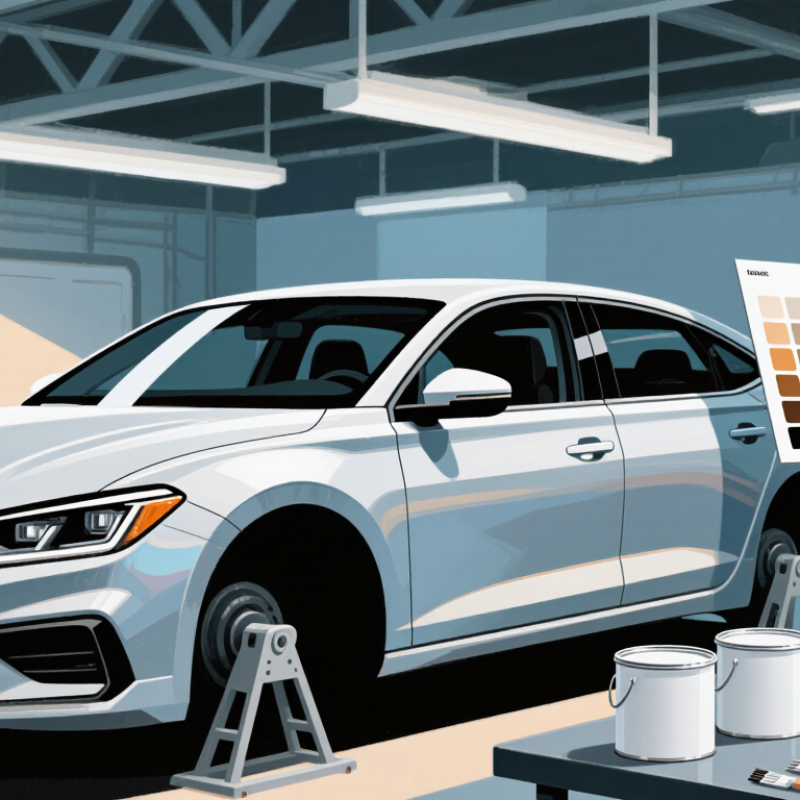
How to Choose Custom Mixed Car Paint in 2026

Understand Custom Mixed Car Paint and Its Main Types

Custom mixed car paint is blended to match a vehicle’s color code, age, and finish—not simply to copy a paint-chip shade. The main systems are waterborne and solventborne paints. Waterborne formulas use water as the primary carrier; solventborne formulas use organic solvents. Both need compatible primers and clear coats. A second distinction is the coating system: single-stage paint combines color and gloss, while basecoat-clearcoat applies color first and protection afterward. Metallic and pearl finishes add reflective flakes, so their appearance can shift with viewing angle.

A 2024 global automotive color popularity report found that neutral shades made up roughly four in five new-car colors. That helps explain why matching white, gray, or black can be surprisingly demanding: subtle undertones show clearly beside an older panel. For a reliable match, a technician should account for lighting, spray technique, and paint age. A test card matters. Even a careful formula may look different under cloudy daylight.

Tips: Ask for a spray-out card and inspect it beside the car in direct sun and shade. Check the metallic effect from several angles. Keep the paint code and mixing details; they help with future repairs. Perfect matches are not always perfect.

Identify Your Vehicle’s Paint Code and Color-Matching Needs

Find your vehicle’s paint code before ordering custom mixed paint. Check the driver-side door jamb, under the hood, or inside the trunk; placement varies by vehicle. A registration document may list the color name, but names alone rarely identify the exact formula. Record the full code, including letters and suffixes, and confirm it against the vehicle’s year and model. The 2023 Global Automotive Color Popularity Report found white accounted for 34% of vehicles, followed by black at 22% and gray at 17%. These figures describe popular color families, not the precise shades or formulas used on individual cars.

Next, decide what “match” means for your repair. A paint code is a starting point, not a guarantee: sun exposure, repairs, and clear-coat aging can shift the finish. Metallic flakes can also look lighter or darker when sprayed at different angles. If possible, ask a paint professional to compare a spray-out card with a clean panel in daylight. Check it from several angles. For a small chip, an exact code may be sufficient; for a door or fender, blending into nearby panels may look more natural. That takes extra time, and it is easy to underestimate. Even a careful match can appear slightly different under garage lighting, so inspect the sample outside before committing.

Compare Paint Formulas, Finishes, and Compatibility

Choosing custom mixed car paint in 2026 means matching the formula to both the desired look and the existing surface. Solvent-borne and waterborne basecoats differ in application and drying behavior; neither is automatically compatible with every primer or clearcoat. Check each product’s technical data sheet for substrate approval, mixing ratio, reducer, flash time, and temperature range. Then spray a test panel. Small detail. Metallic flakes can appear darker when they settle unevenly, while pearl finishes often need consistent overlap and lighting to judge.

Finish changes the color’s character. Gloss emphasizes depth and reflections; satin softens them, and matte can reveal marks more readily during cleaning. The 2024 Global Automotive Color Popularity Report puts white at 29%, black at 23%, and gray at 22% of new-vehicle colors worldwide. Those figures describe factory vehicles, not custom-paint demand, but they show how strongly neutral shades shape expectations. A custom mix may look different under a shop’s LED lights than outdoors. Check it in both places.

For a repair, confirm the new coating suits the old paint and any exposed primer. A small test area can reveal lifting, poor adhesion, or a noticeable color shift before a full panel is coated. The awkward part: a perfect formula cannot fix inconsistent spray technique. Compare the dried sample, not just the wet paint, and keep the formula and application notes for later matching.

Evaluate Suppliers, Mixing Accuracy, and Application Requirements

How to Choose Custom Mixed Car Paint in 2026

A reliable custom mix starts with the vehicle’s paint code, but the code alone may not match years of sun, repairs, and fading. Ask suppliers how they verify formulas, control scales, and document batch numbers. Request a small spray-out card before approving a full order. Check it beside the vehicle in daylight and under a workshop light. Small differences matter. The 2024 Global Automotive Color Popularity Report found gray accounted for 22% of new-car colors and silver 10%. These close, often metallic shades can look strikingly different as viewing angles and lighting change. For visual comparison, ISO 3668 provides a standardized method for assessing paint color.

Application requirements should guide the formula and supplier choice. Confirm that the product is intended for the repair area and compatible with the existing coating system. Ask for the technical data sheet, including mixing ratios, reducer guidance, flash times, and recommended temperature range. Then check whether your spray gun, compressor, and booth conditions can meet those requirements. A precise formula can still fail on a cold panel or with incorrect atomization. Test it wet. A spray-out card should use the same number of coats and similar technique planned for the repair. One limitation is easy to overlook: a card cannot fully reproduce curved panels or aged clearcoat. Judge the match on the vehicle before committing to the whole repair.

How to Choose Custom Mixed Car Paint in 2026

Suggested evaluation weights for comparing suppliers, mixing accuracy, and application requirements. These are planning recommendations, not market statistics.

Use the weights as a starting point and adjust them to suit the repair. Confirm color-match procedures, product compatibility, and application instructions in the supplier’s technical data sheets; test-spray a panel when appropriate.

Choose the Right Paint and Confirm Your Order Details

How to Choose Custom Mixed Car Paint in 2026

Choose paint for the panel you are repairing, not from a screen image. Record the vehicle’s paint code, year, model, and panel location. Tell the mixer whether the finish is solid, metallic, or pearl. Sun exposure and previous repairs can shift the color. A paint code is a starting point, not a promise. Axalta’s 2024 Global Automotive Color Popularity Report found white at 29% worldwide, black at 23%, gray at 22%, and silver at 9%. These figures describe factory colors, not custom-paint demand, but they show how common neutral shades remain.

Before confirming your order, ask for a spray-out card and check it beside the car in daylight and garage lighting. A quick indoor glance feels convenient, but it can be misleading. Confirm the quantity, finish, compatible primer and clear coat, and whether the mix is ready to spray or needs reducer. Ask the supplier to list the formula and batch details on your order. Even careful color matching can miss a subtle pearl shift.

Tips: Photograph the test card beside the panel. Confirm the product system and amount before payment. Keep a little paint for later touch-ups; matching a new batch may not be exact.

How to Choose Custom Mixed Car Paint in 2026 - Choose the Right Paint and Confirm Your Order Details
Decision Area What to Choose or Confirm Useful Details Why It Matters
Choose the Paint
Colour identification Provide the vehicle’s paint code and confirm the colour name, if available. The code is commonly found on a vehicle information label. Its location varies by vehicle; the owner’s manual or a repair professional can help locate it. A paint code is a stronger starting point than a colour name or a description such as “dark blue.” Age, repairs, and production variations can still affect the match.
Colour-match method Ask whether the mix will be matched from the code, a physical sample, or both. For a faded or previously repainted panel, a clean sample or an in-person colour check can help identify differences from the original factory colour. Even a correctly identified formula may look different on an aged vehicle or under different lighting.
Paint system Select a system suitable for the repair and confirm whether it is a basecoat-and-clearcoat system or a single-stage finish. Basecoat-and-clearcoat uses a colour layer followed by a compatible clearcoat. Single-stage paint combines colour and gloss in one coating system. The systems differ in application, finish, repair method, and required products. Do not assume that components from different systems are interchangeable.
Paint type Confirm the coating type and intended use with the supplier or product technical data sheet. Automotive coatings can include solvent-borne and waterborne products. Availability and permitted use vary by product and location. The application equipment, drying conditions, safety measures, and local rules may differ between products.
Finish and effect Specify solid, metallic, pearl, or another effect finish, and confirm gloss level where relevant. Metallic and pearl finishes contain effect pigments; their appearance can change with spray technique, viewing angle, and lighting. Finish details help prevent ordering a colour family or appearance that does not match the intended repair.
Repair area State whether the paint is for a small chip, one panel, or a blend into adjacent panels. Coverage depends on the product, colour, application method, surface preparation, number of coats, and spray loss. A realistic quantity estimate helps avoid both shortages and unnecessary excess. Ask for an estimate based on the specific repair.
Application method Confirm whether the paint is supplied for spray-gun application or another intended application method. Do not assume that a product supplied for one application method can be used with another without the specified preparation or adjustment. Using the wrong application method can affect film build, finish, and product performance.
Primer and substrate Identify the repair surface, such as bare metal, existing paint, plastic, or filler, and confirm the compatible preparation system. Different substrates may require different cleaning, sanding, primer, or adhesion steps. Follow the product instructions for the actual surface. Paint selection alone does not ensure adhesion; suitable surface preparation is essential.
Clearcoat and reducer Confirm which clearcoat, reducer, or other components are required and compatible with the selected paint. Use the products and combinations specified for the paint system. Follow its technical data sheet for mixing, application, and drying instructions. Incompatible products or guessed mixing proportions can lead to application or finish problems.
Confirm the Order Details
Mixing ratio Request the exact mixing instructions for the supplied product, including any required hardener or reducer. Ratios are product-specific. Measure accurately and follow the current technical data sheet rather than using a general-purpose ratio. Correct mixing supports the intended application and curing performance.
Quantity and unit Confirm the amount, unit of measure, and whether the quoted quantity is ready-to-spray or unmixed product. Paint may be sold by volume or weight; the order should clearly state which. Added components can change the final usable volume. Clear units prevent confusion when comparing quantities or preparing the paint.
Test spray Ask whether enough material is available for a test panel before painting the vehicle. Apply the paint using the intended process, allow it to dry as directed, and compare it with the vehicle in suitable lighting. A test panel can reveal colour or effect differences before the repair is applied to the vehicle.
Product documents Request the current technical data sheet and safety data sheet for the supplied products. Check instructions for preparation, mixing, application, drying, personal protective equipment, and storage. Product documents provide the specific handling and application information needed for that coating.
Local compliance Confirm that the product is permitted for the intended use in the location where it will be applied. VOC limits and other coating requirements can vary by jurisdiction and application type. Checking local requirements before ordering helps avoid purchasing a product that cannot be used for the intended job.
Final order confirmation Review the paint code, colour description, paint system, finish, quantity, application method, and required companion products. Keep a written record of the selected details and any supplier confirmation before the mix is prepared. A complete order record makes it easier to verify that the supplied paint matches the requested specification.

Practical reminder: Always follow the current product technical data sheet and safety data sheet. Use appropriate ventilation and protective equipment, and seek qualified assistance when required.

FAQS

What is custom-mixed car paint?

It is blended to suit a vehicle’s color code, age, and finish. A paint-chip shade alone may not match.

Where can I find my vehicle’s paint code?

Check the driver-side door jamb, under the hood, or inside the trunk. Placement varies. Record every letter and suffix.

Does the paint code guarantee an exact match?

No. Sun exposure, earlier repairs, and aging clear coat can shift the color. The code is only a starting point.

How should I check a color match?

Ask for a spray-out card. Compare it with a clean panel in direct sun and shade. Check metallic paint from several angles. It can fool you.

What is the difference between waterborne and solventborne paint?

Waterborne paint uses water as its main carrier. Solventborne paint uses organic solvents. Their application and drying behavior differ.

What is the difference between single-stage and basecoat-clearcoat paint?

Single-stage paint combines color and gloss. Basecoat-clearcoat applies color first, then a protective clear coat.

How do I check paint compatibility?

Check the technical data sheet for primer, clear coat, mixing ratio, and temperature range. Test a small area first. This step is easy to underestimate.

When might blending into nearby panels help?

For a door or fender, blending may look more natural than painting one panel alone. It takes extra time, and the result can still vary under garage lighting.

Conclusion

Choosing Custom Mixed Car Paint in 2026 starts with understanding the available paint types and deciding how closely the color and finish should match your vehicle. Locate the vehicle’s paint code, then consider whether its age, sun exposure, or previous repairs may affect the color-matching process. A code provides a useful starting point, but careful comparison can help account for visible differences.

Before ordering, compare paint formulas, finishes, and compatibility with your vehicle’s existing coating and the area being repaired. Assess suppliers based on their mixing accuracy, clear product information, and guidance on preparation and application. Confirm whether the paint is suitable for your intended repair and what additional materials or steps may be needed. Finally, verify the color, formula, finish, quantity, and application requirements in your order details so the paint you receive fits your project.

Sophia

Sophia

Sophia is a dedicated marketing professional with an exceptional depth of knowledge about her company's product offerings. With a keen understanding of market trends and consumer needs, she crafts insightful content that showcases the unique benefits and innovations of her organization. Sophia......